The games industry is big business, this goes without saying but in a world two years into a continuing pandemic this industry unlike both the film and music sectors has the ability to rough ride over the effects of Omicron or whatever comes next. There is however a self inflicted spanner in the works which has over the last two decades been building and building and was clearly demonstrated in the failure that was Cyberpunk 2077. This spanner is the ever raising quality benchmark but to understand this we have to go back to the beginning.

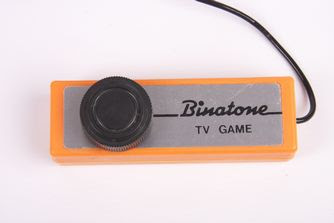
To a man called Gulu Lalvani, and that is who you say?……well he’s now 82 was born in India moving to London with his family in the sixties and is worth somewhere in the region of £435 million. He’s sponsored QPR back in the early noughties and his company these days tends to work a lot with Motorola. And for me as a man of 48 he is responsible for my life long love of gaming being the creator of the company Binatone in 1958 and my first ever console around 1979, the Master MK1V. If you don’t know what that is its basically pong or two bats and a ball on the screen, simple enjoyment.

Fast forward to 1982 and a man by the name of Clive Sinclair brought out a home computer using a Z80a 3.5 MHZ CPU which I spent many hours on, most of which were waiting an age for games to load from a tape deck only for the inevitable crash at the last few seconds of loading. This computer gave me my first tasting of coding, which after spending three hours typing out equations resulting in a stick figure moving once across the screen, felt somewhat pointless. However to someone at the time like Mike Singleton a teacher from Cheshire this new medium was his potential calling. He wrote games like Midwinter and The Lords of Midnight eventually giving up his teaching to work for Clive Sinclair. Or Nigel Alderton who at age 15 coded his first game Rocket Raider which he sold to a computer shop for £700. He went on to write games like Chuckie Egg, Ghosts N Goblins and Commando and worked for Ocean games.
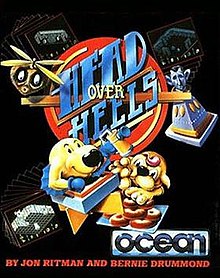
These one man armies in a lot of cases were writing games from their bedrooms and resulted in a boom of creativity. I can remember walking into WHSmiths and seeing new games every other week ranging in price from 99p to £5.99, so much was the choice that my friends used to swop and copy each others games to try and keep up. The benchmark at the time though was fun, yes some games like Head over Heals came along that pushed the graphics capabilities of the hardware but the focus was always to create fun enjoyable games.
As time has gone on with the formation of huge gaming studios the quality benchmark has superseded everything with studios trying to out do each other. Santa Monica studios as an example formed in 1999 by Allan Becker whos notable main game God of War has made them into a successful business with around 250 employees and the last game costing $100 million to produce. But this is the new norm, Call of Duty $100 million to produce, MGS5 $80 million to produce, The Witcher 3 $50 million to produce……..everyone pushing to reach the ever moving benchmark where graphics, realism and gameplay seem to have squeezed fun out (anyone who’s played Demon Souls understands this).
Now occasionally a game like Super Red Hot on VR comes along which looks like a dogs dinner but makes up for it in gameplay and the all important “f” factor, but sadly these are few and far between because as consumer’s we are also at a point of being comatose by the industries strive to push the envelope. Playing the latest Fry Cry the other night I found myself pissed off that the street lightbulbs couldn’t be shot out and wondered how on earth this could of got through consuming testing.

This brings me back to Cyberpunk 2077, approx. 500 people worked on it, and it cost approx. $313 million to make. First touted by the studio in 2012 with some trailers landing in 2013. By the fall of 2020 and after several death threats received by the company for the delays the game was released under a review embargo and soon came under fire as the game was clearly unfinished.
This game fell foul of the constant push to attain the ever moving quality benchmark and as with films there is always a budget and time limit set to achieve the best that you can do under those set parameters. A failure and yet still made over $600 million so as I say big business but this constant push to be better than what’s gone before is hurting the industry.
Gulu Lalvani helped start an industry back in the 1970’s which today generates massive revenue but the industries push for perfection has a real tendency to leave out what Gulu wanted to give the public, something fun to play.