
ONI classified article under [DATA EXPUNGED]:
MJOLNIR POWERED ASSAULT ARMOUR
Data Entry [1]: Generation 1 Armour (Models Mark 1-3)
When work began on the controversial Spartan-II program it was decided that a completely new weapons platform would be needed to further refine the super soldiers they were creating. This gave birth to the MJOLNIR Mark I Prototype.
It was massive – far too unwieldy to be used effectively and needed to be linked directly to an unmovable fusion reactor to power it, yet the data gained from its creation was invaluable. It made the user able to lift several tons, increased their stamina and physical movements several fold and contained a prototype computer that helped with battlefield communications. Although it did not have any ability to carry an on board A.I. like later versions, it did have an inbuilt Gatling gun. It never saw use in combat as taking out the immobile power generator or the tether would completely immobilise the suit, making it impossible to escape from.
The Mark II Prototype further refined the core body of the suit, making it much smaller but with even better output in all areas. As it still needed to be tethered to an outboard power supply this was also never used in battle. A new component was a refractive coating added to the armour, which would help deflect the devastating plasma attacks from the Covenant weapons to a degree.
The first technically mobile suit, the Mark III features a wireless power transmitter built into the suit itself, allowing the soldier to move with far more freedom than before. The generator still had a limited range and could not be moved though and this left the user completely immobile and defenceless if they were to go out of range.

Data Entry [2]: Generation 1 Armour (Models Mark 4-6)
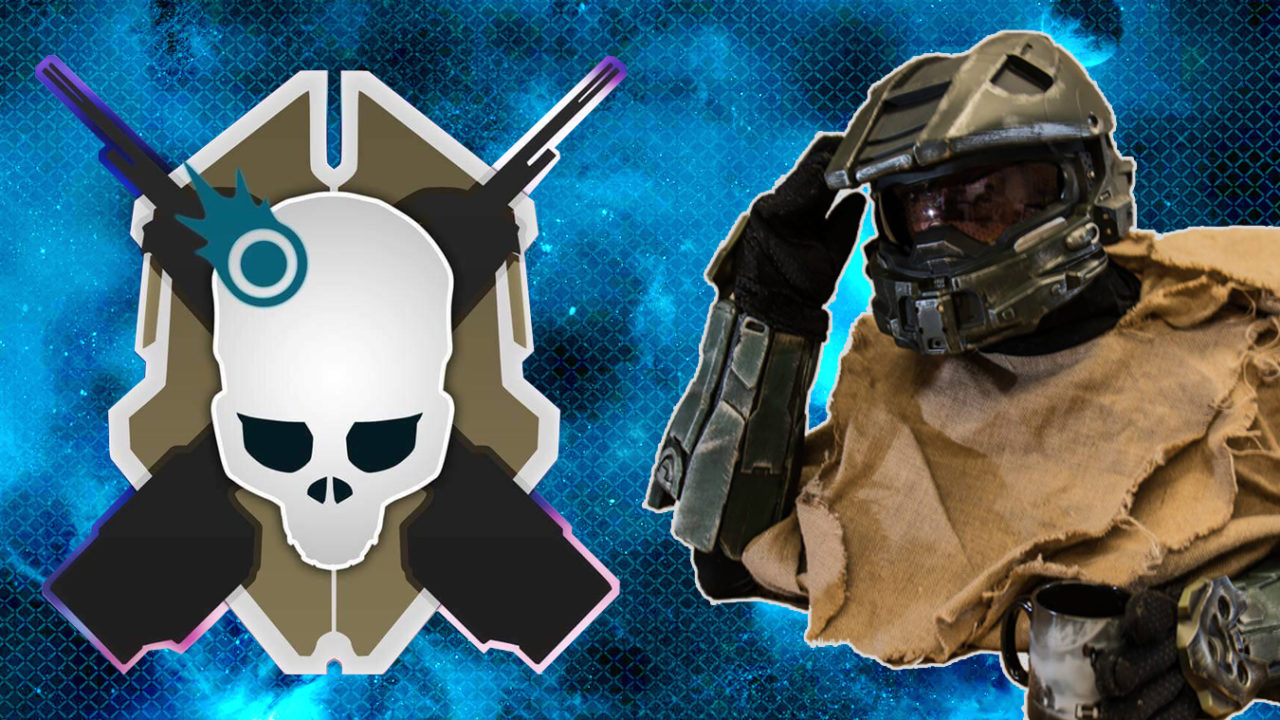
The Mark IV Powered Assault Armour is the first of its type that could operate competently in the battlefield and was a major turn in the battle against the Covenant. After being streamlined into an actual humanoid shape rather than the bulky mech-like armour of its predecessors and equipped with compact fusion cell batteries allowing the suit complete freedom, the Mark IV was the Spartan-II’s personal armoury and life support rolled into one.
Made famous by the legendary soldier John-117, the powerful combat suit features unique multi-layered armour that augments and further increases the already genetically enhanced Spartan-II soldiers with:
· Hardened Titanium outer armour – Heavy outer armour that is the main form of protection against assault. It also has several modular hard points to allow for further customization.
· Titanium composite bodysuit – A strong and flexible sleeve worn under the main armour to further protect and contain the sub-systems underneath (as well as the user).
· ‘Hydrostatic’ Gel layer – This layer acts like a G-suit for fighter pilots, protecting them from dangerous G-forces or high velocity impacts. It also regulates users’ temperature and increases comfort of the suit.
· Reactive Metal Liquid Crystal Layer – An incredibly expensive component, this layer of reactive metal increases the users’ power and reaction time exponentially and is controlled directly by the users brain functions through microchips imbedded in the skull of the Spartan soldier.
· Pressure Seal – The pressure seal locks the suits internals to become air/water tight and even allows the wearer to survive in space without detriment. The suits in built air supply can last around 90 minutes.
· Bio foam Injector Port – This special connection allows bio foams (a special medical aid supplement that can temporarily stem blood loss and organ failure) to be inserted right into the suit without having to take it off.
· Fusion Reactor – The new and highly portable fusion reactor was pure fantasy for those working on the original prototypes of the MJOLNIR armour. This component powers all the functions of the armour and can last for huge amounts of time before needing replaced.
· A fully battle ready suit can weigh nearly 1000 pounds and is impossible for normal soldiers to wear, as the suits properties that allow it to increase reaction times and increase strength would grind an average person’s bones and muscle tissue to dust.
The Mark V Armour was the next generation armour created for the Spartans nearly 20 years later. There are numerous minor technical improvements that aid the suit in numerous ways but there is two critical and game changing improvements made to this suit.
· 
The Liquid Crystal Layer is now split into two components
· The first layer has the same properties that the Mark IV’s, but is now augmented even further.
· The second layer provides a compact space for an A.I. to operate in, a function that was previously only available to huge, expensive warships.
This increases the tactical usage of the Spartan-II soldier massively through the neural network that is connected directly to the users’ brain. A famous example of an A.I. operating effectively within a MJOLNIR armour is Cortana working with the Spartan John-117. With both their minds working in parallel it gave the suit incredible reaction times – even to the extremes of deflecting an anti-tank missile with a punch.
The next advancement is a powerful Energy Shield reverse engineered from Covenant technology, using the users’ power reserves to protect them from devastating plasma projectiles and more. If the shield is hit too much it would shut down to protect the fusion generator, but will quickly come back online if the user avoids confrontation for long enough.
This armour exemplified the modular nature of the MJOLNIR armour and featured dozens of different varieties for every combat possibility. It also allowed for weapons to be stored magnetically on various hard points over the armour.
The Mark VI armour was actually developed in parallel to the Mark V armour (as the powerful ‘Black’ Armour prototype) but had several incredible advancements over the former. Coming out only a year after the Mark V, this armour’s main benefits are improved defence against both ballistic and energy based weapons, improved A.I. integration and the inclusion of integrated bio foam injectors. This meant the user would not need any form of medical attention until after a skirmish is over as the system could retroactively stem any sort of injury until it could be looked at later by a medical professional.

The hydrostatic layer receives an upgrade called the ‘Lock Down’ which fixes the user in place to protect them from high energy impacts, even from falling from an aircraft. There is an also more advanced computer component, lowering recoil from weapons to giving the user a powerful motion sensing radar. This is the last main variant created exclusively for the Spartan-II soldiers (and a very select group of Spartan III-soldiers) and as such concludes the Generation 1 MJOLNIR program. It proved too old a platform for the mere 30 Spartan-II’s left and was far too expensive to continue production on, bringing on the evolution of the GENERATION 2 MJOLNIR.
//