
Phil Spencer on The Metaverse, supply and tackling toxicity
Executive Vice President of Gaming and Head of Xbox Phil Spencer recently gave an interview on Kara Swisher’s programme ‘Sway’ via The New York Times and has discussed a host of hot topics from within the gaming industry. This 30ish minute interview lead to some great insights from Phil as to Xbox’s plans for the future of gaming, but also highlights some areas where there is still a lot of work to be done.
I’m going to do my best to give you the key takaways from this interview, althought I highly recommend checking it out for yourself! Please find the link at the bottom of the page.
How does The Metaverse impact Xbox
The interview began with Phil speaking about The Metaverse. A topic I think many are keen to hear companies like Microsoft, Sony and other big players in the video game publishing space speak more on. The link to crypto and NFTs and the general fear that this strikes into gamers, I felt Phil Spencer did a relatively good job of reassuring listeners.

Kara …”Talk a little bit about the virtual worlds aspect. Because a lot of people are now paying attention to this metaverse idea, which has been going on in gaming for quite a while.”
“Yeah, that’s exactly right. And one of the things, even going back to maybe some of the origins of gaming, think about video arcades of people coming together in a physical place with a room of a bunch of video game machines… And as gaming moved into the home, there was a real desire to bring that sense of community, belonging, togetherness that we had in the arcades. And our experiences that we built kind of mirrored that, as you talk about massively multiplayer games, people playing World of Warcraft, people playing Ultima Online Minecraft together. The sense of community and being together is just kind of a native part of what gaming is today.”
Phil likes to think of it as a way of emulating that original sense of gaming community from back in the arcades, but for the newer generations. Importantly, there was no mention of NFTs or Crypto. He went on to describe how this metaverse and digital methods of communicating and socialising feel far more native to Gen Z. Thankfully he sees them as an extension of gaming, a way to add more to the experience, as opposed to changing too much of the fundementals of what we have.
“Is the metaverse just an extension of the virtual worlds already in video games, or is it something different?”
Yeah, I definitely see it as an extension of what gaming has been doing. I think what we learned early in gaming is if you put players together in a virtual space, you can, one, level the playing field for everyone. Everybody feels equal. But yet, we can have our own identity, what my screenname is, what my character looks like.”
Drawing parallels between this and other online environments, such as work spaces and how it has evolved. Phil went on to hint that there will come a time when new generations will find socialising in digital spaces far more native than current generations ever have. Human beings like what is familiar, and despite the rapid changes we have made since The Industrial Revolution, we can still only adapt so fast. For the younger generations, big online environments are like second nature and that is only going to increase as the years role on. It is because we are talking about a generation 10 years out that Phil Spencer inadvertantly offers insite into Xbox’s 10 year plan. We often hear him speak about the 1-3, 3-5 and 5-10 year plans, but generally we don’t hear about them until they become the 1-3 year plans.
“…thinking about Gen Z, there’s a whole generation that are growing up where their social connection to the world is through video games. It’s not just about the play itself, but it’s about, where do you hang out after school? Where do you meet your friends? What are those shared experiences that you like to go do together? For the generation that’s growing up, that being a natural way to get things done with your coworkers is going to be much more native than it is for my generation of people, who will seem like kind of a bolt-on to the experience that I’ve had.”
The pandemic was good for business?
The Pandemic has accelerated the growth of gaming and big tech in general but Phil feels that there was a natural growth in gaming anyway. And by the way, Satya Nadella did too, in 2017 he made gaming a core pillar of Microsoft, headed by Phil Spencer. This was when Phil was made EVP of Gaming.

“…It’s hard to say a global pandemic has been good for business. It’s hard for me to rationalize in that way. But what I will say is there’s been natural growth in gaming for decades. And we saw an acceleration of the growth during the pandemic.”
This was shown as Xbox consoles sold out in March/April 2020 – right at the end of a console generation – and networks “tapped out”.
So it seems that The Metaverse is here to stay, but will change and develop in line with users. Microsoft have learned their lesson from 2013 where they tried to force too many changes on the consumer, facing massive backlash. Ironically, most of which ended up happening eventually anyway (Hi Alexa!). What I think markets, especially big tech have learned, is consumers need to discover the benefits for themselves without having things thrust too hard upon them. Give people options and they will naturally gravitate towards innovations. I firmly believe if gaming is to continue to grow as an industry, companies need to find ways to continue new users acquisition, engagement and monetization methods. The Metaverse in gaming is actually only a way of adding to things that already exist such as Xbox Live.
The best selling Xbox… so far
Xbox X|S are outselling all other previous Xbox systems and demand for video game consoles has increased! Issues affecting availability to the public are down to an increase in demand, scalpers, and supply chain issues. Phil explains this and actually has recently likened his job not to one in entertainment, but to more of a supply chain job. The metaphor he actually uses is comparing it to a waterpipe.
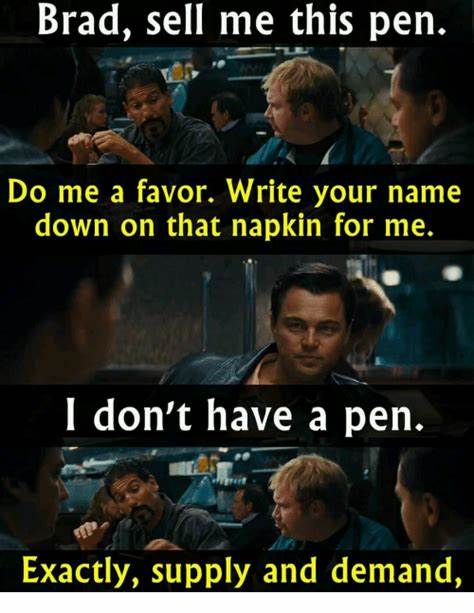
“It’s almost less an entertainment job and more a supply-chain job at this point… how do we move consoles from A to B location and securing chips. It’s like water flowing through a pipe. Once you’re working on supply chain, you work all the way at the manufacturing end. But it seems like every time you free up any bit of capacity to move inventory through, you hit the next thing, shipping. Okay, then when you get to shipping, you have to get it to the stores. Once you get it to the stores, there’s so much demand. How do you actually manage so that real customers are buying our consoles and it’s not a bunch of scalpers and bots that are securing the capacity? It’s multi-step and it’s kind of a 24-7 job for the team right now.”
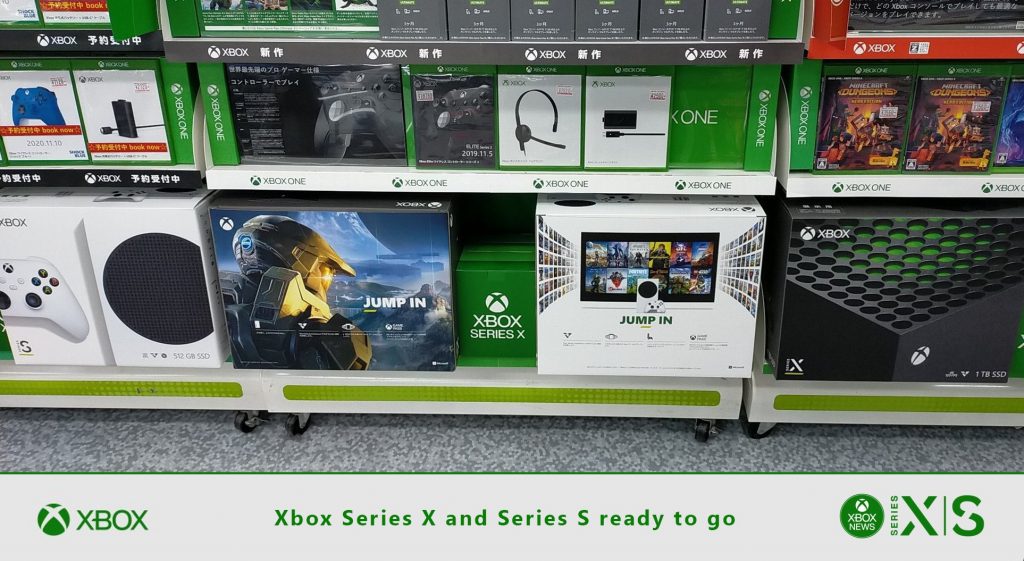
There really is a focus then, on trying to get as many of these consoles out to people as possible. Fortunately for Microsoft and Xbox, software sales are not their only business model, and next gen consoles are not the only way to play. This has meant that, unlike Sony PlayStation, they have been able to allow their development studios to focus on next-gen hardware. As such, we are seeing the first line of AAA next-gen games come first to Xbox, which surprised many due to PlayStation’s CEO Jim Ryan infamous quote “We believe in generations”.
Console or cloud? … Or both?
They went on to discuss the future of Xbox and cloud gaming too as Kara asked Phil, “But does the future of Xbox come in a box? You’re focused on streaming, obviously.” Which is true but the way Xbox have built their streaming service aroud the console itself, so it is not going anywhere anytime soon. The consoles form the basis of the streaming hardware and therefore is very much at the core of what they are building in terms of streaming. Streaming is just the technology to enable them to grow from 200 million person market to a 2 billion person market. That is why Phil wants Xbox games on devices you already have. You can see this in his response. The other thing… He said TVs as one of the devices. Could this mean we are close to an announcement?
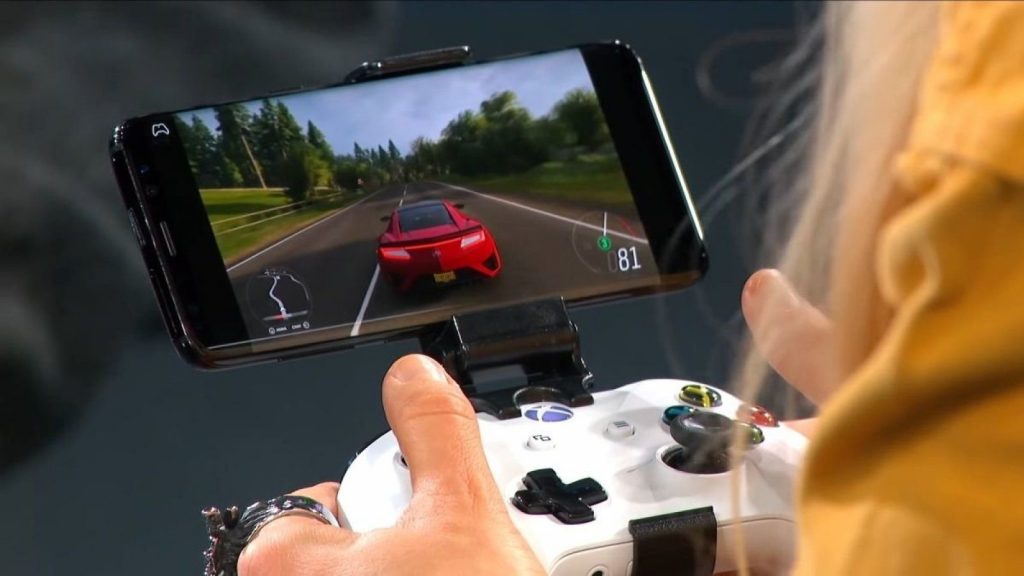
“Yeah! We want you to be able to play Xbox on any device, a device that you might already own, a phone, a tablet, a smart TV… Xbox Cloud is our product that allows people to stream Xbox games to any device.”
He went on to describe the differences between the Netflix model, compared to what Xbox is doing.
“From a streaming standpoint, it is. I’d say the difference for us is in the business model of — you can buy every game that’s available on the subscription, which is a little different than a music subscription or a movie subscription.”
Fear not gamers buying games to own is here to stay! And if you don’t believe Phil telling you then listen to the what the money says… When asked which is a bigger market for them currently, Transaction or subscription Phil said confidently without hesitation.
“Transaction is bigger than subscription. Subscription is growing faster, just because it’s relatively new. And with Game Pass, we were one of the first movers in that space. But the transaction business is very large. We still sell physical disks.”
Xbox’s big headstart over big tech competitors
With other tech power houses dipping their toes into the 200 billion dollar industry that is gaming, Phil inevitably was asked about the new competition from Netflix, Google and Amazon. To the relief of many, Phil seemed confident in the headstart that they have. Citing their building up of first party content and professional relationships in the industry for the last 20 years and the quality of their technology. The latter appearing to be the easiest to get on top of from a timing perspective. Building up a culture and cultivating talent from studios takes time and is a big learning curve as the teams at Xbox have learned in their 20 years.
“I think for us, our strength is we just passed 20 years of Xbox being in the market, we have thousands and thousands of game-developer relationships, creators who are already building on our platform. And the other one is the social networks that we have with Xbox Live. We have millions of people who come on to Xbox Live every month. Those friends relationships that are on the network are incredibly important. I think cloud is critical. And Netflix clearly has cloud. Amazon has cloud. Google has a real cloud capability. But without content, community and cloud…”

He goes on to talk about Netflix buying one or two studios at first, but what he appears to be alluding to is that ultimately they have a massive head start and it will be a while before the others can seriously compete with them.
Xbox Live and Phil’s committment to online safety, diversity and equality
Xbox Live has always been thought of as the better online service, when compared to PlayStations Plus, or at least more reliable which may or may not be true. But it was certainly public opion. Such is the growth of online gaming and socialisation patterns of children especially, that the second half of the interview very much focused on problems facing for example parents. Phil Spencer thinks it is important to be able to have a ‘Child’s Account’, which can be managed by parents from their (the parent’s) mobile phone. This way their is control over the games played, the amount of play time and the data that is taken by Microsoft and 3rd party partners.
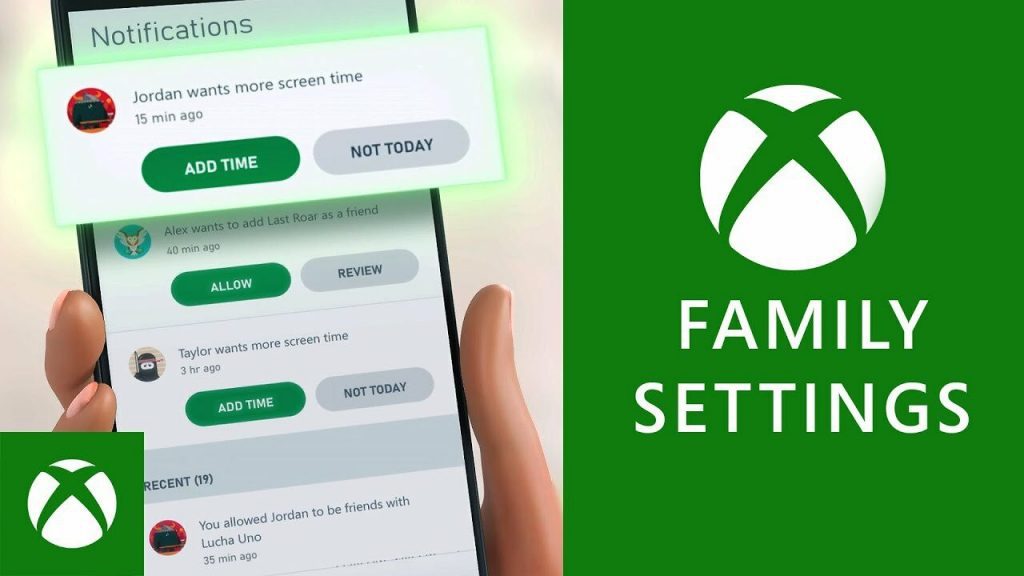
“We have child accounts on our platform. So if a child is on our platform, your children, I would encourage anybody out there to create a child account on Xbox Live. You can manage that with your mobile phone and get real detailed data on what your kids are doing, who the friends are on the network that they play, block people that they play, block spending.”
Kara also spoke to Phil about other potentially marginalised or vulnerable groups within the gaming industry and what he and Team Xbox are doing to help combat the toxicity. Kara used the example of Activision Blizzard and the recent bad press they have had of late regarding abuse at the company. It was very diplomatically answered by Phil, who rightly condemned these practices but stopped short of calling out Bobby Kotic and giving threats to future business with Activision. He instead noted that they (Xbox) had not been perfect in the past but are pleased with the way they went about fixing this, learning from it and being better. He added that rather than calling these companies and practices out he wants to focus on seeing what they can do to help fix the ongoing issues.
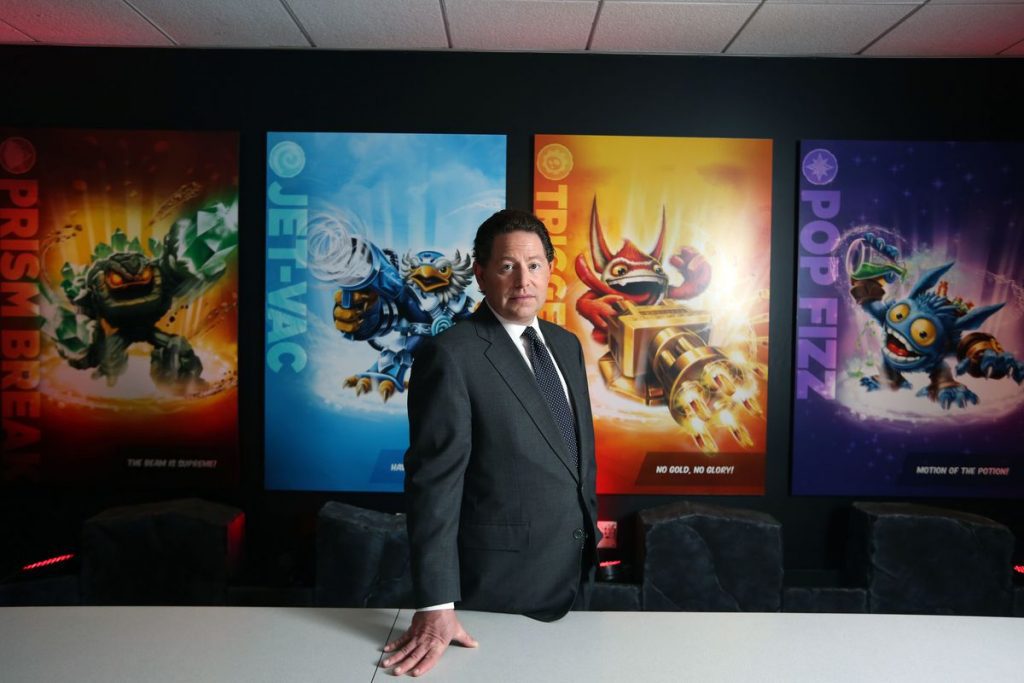
“The work we do specifically with a partner like Activision is something that, obviously, I’m not going to talk publicly about… this isn’t about, for us as Xbox, virtue-shaming other companies. Xbox’s history is not spotless.”
“And any of the partners that are out there, if I can learn from them or I can help with the journey that we’ve been on on Xbox by sharing what we’ve done and what we’ve built, I’d much rather do that than get into any kind of finger-wagging at other companies that are out there.”
The future of Xbox games and growing an industry
The interview finished off with talk of about Xbox’s portfolio of games, the variety and the importance of diversity in a healthy growing industry. In order to have a portfolio of games that appeal to 2 billion gamers Phil believes you need to have games and stories that different groups can empathise with. To do this, you must have games that appeal to these groups by having developers who can bring authenticity. This diversity is imporant to growing the industry as a whole and improving their (Xbox’s) reach. In the interview you also hear the statistic that 45% of gamers are female. Whilst I was surprised at this statistic, it is one that I was very pleased to hear. It also makes you appreciate how far we have come but how much there is still left to do.
“And if you’re talking about now video games telling stories and sharing empathy between different groups based on me being able to tell my story through my lens and you can play that game, the voices that are telling these stories, that are making decisions about what content shows up, about what content is right, has to be diverse in the broadest sense of that word in order for us to achieve the goals that we have in gaming…
Critically, this also gives us indications into where he will look to be doing his shopping, with regards to studio acquisitions and partnerships. We know they are working hard on Europe, Japan and Sout East Asia. I think we can also expect more in Scandanavia and countries in Africa.
Phil then goes on to suggest that the size or budget of the game is not a decisive factor in what makes a ‘massive’ game anymore, using examples such as Among Us, ROBLOX, Minecraft and other titles which are not seen as AAA by inner gaming circles, but are some of the biggest in terms of commercial success and engagement levels. In short, he sees the value of diversity to their portfolio. He wants something on Xbox for everyone and knows he NEEDS it, if it is to grow to reach 2 billion gamers.
The thing in the gaming space is something that starts small can take over. Because it’s not necessarily the production budget that leads to gaming success. It’s actually the creative capability, gameplay capability of the team. So one of the reasons I love these small games — if we want to call them that — that come in is it’s almost certain that the next big game will start as a small game.”
Being a developer under the Xbox umbrella is something that is spoken about as being a positive thing from those in the industry now. Certainly a turn around from 2014/15. Indeed, it is believed that Microsoft managed to land the Zenimax deal specifically because of Phil and the relationships he has curated since he took charge of Xbox.

I know it is spoken and joked about in some areas of the game community, but i think Xbox gamers and indeed gamers everywhere can be very thankful for Phil Spencer’s leadership at Xbox. He took a sinking ship, plugged the holes and then made Xbox a core pillar of the Microsoft machine. Cannonballing himself and Xbox as leaders within the industry in every sense of the word. I look forward to continuing to watch Phil’s vision for Xbox unfold.
I had a great time listening to the interview, less so taking notes to write this, as so much was said. As i mentioned before, I highly recommend checking it out for yourself. You can find the link here: Opinion | To Understand the Metaverse, Look to Video Games – The New York Times (nytimes.com)