
Peter Connelly, a video game composer and sound designer, has had a remarkable career in the gaming industry. With over two decades of experience in the field, Connelly has worked on iconic games such as Tomb Raider, Assassins Creed, Project Cars, Driver & South Park. In this interview, Connelly shares his experiences working on Tomb Raider, including his collaboration with the London Symphony Orchestra. He also discusses his approach to creating a soundtrack for a game and the biggest challenges he faces in the process. Finally, he shares some insights on the future of video game music and sound design and hints at some upcoming projects he’s working on.
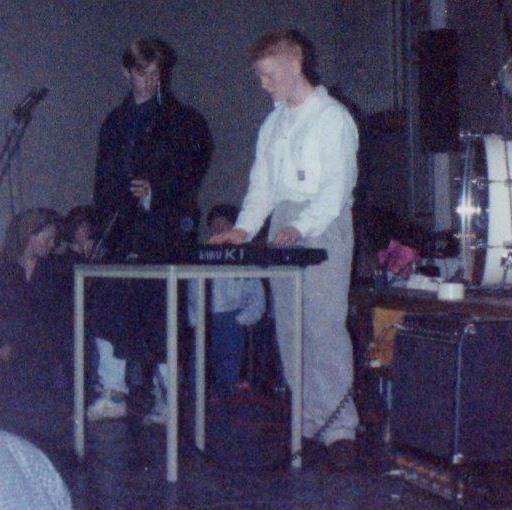
Peter playing at Harton Comprehensive School, End of Term Disco, 1989
What inspired you to become a video game composer and sound designer?
I had a love of video games, right from the very start. I recall playing video games in the 70’s but my first real recollection was the release of “Space Invaders” in 1980, this was an absolute game changer for me. That coupled with my love of music, again, from my early childhood, early 70’s, the two seemed to forge a natural alignment. It was the C64 that really kickstarted my love of Video Game Audio… I just knew from then on, listening to the talents of Hubbard, Galway, Cooksey and co, this is where I wanted to go.
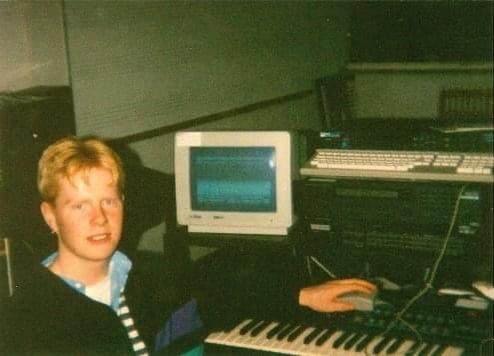
Peter attending Newcastle College of Arts and Technology, 1991
Can you tell us about your experience working on the Tomb Raider series and how it has impacted your career?
Back in September 1998, I landed a job at Core Design (through sheer fluke and being in the right place/situation at the right time). A year before this, I was playing TR2 with my nephew wishing I could work on a huge game… careful what you wish for. At the start of my employment at Core, I wasn’t lined up for Tomb Raider, I was put onto Herdy Gerdy and, at that point, working on TR didn’t even enter my head. It was due to a mood board of music I presented for Herdy Gerdy and a track I wrote, off my own back, for TR3 that piqued the interest from my boss, Jeremey Heath Smith. From early 1999, I was the new composer for TR… I think I imploded and exploded at the same time. From then on, TR was my baby and, although at the time, it was just a job, a job I absolutely LOVED doing, I had no idea that many years after, TR would continue to live, and it would make a difference when applying for future roles. Sadly, towards the end, it knocked the wind out of me, but I am forever thankful to have been given such a rare opportunity, these don’t happen very often, so you must embrace these opportunities when they approach you.

Core Design, 1999. Pictured here are Peter Connelly (left) and Martin Iveson (right).
How do you approach creating a soundtrack for a game and what are some of the biggest challenges you face in the process?
I prefer working with visuals, something I can look at, absorb, and understand… concepts or builds which I translate into music and / or sound. I move audio around (whether that be notes, sounds or instruments) until they fit then build upon that foundation. I also draw influence from other similar soundtracks, these offer a lot which can be forgotten about during the usual ideation processes and, more than often, get you to a place in which you’re not hitting that proverbial brick wall by just hearing something that inspires you.
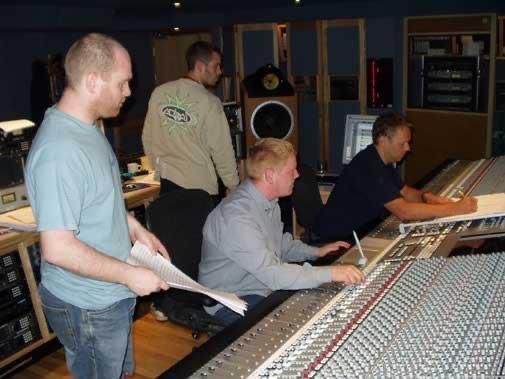
Abbey Road Studios, Studio 3, 2002. Mixing of Tomb Raider ‘Angel of Darkness’. Pictured here are Martin Iveson (left), Peter Connelly (middle), Pete Cobbin (Recording & Mix Engineer) (right), and an unknown Assistant Engineer (rear).
Can you talk about any upcoming projects you’re working on and what fans can expect from them?
I’m not sure I can say much about what projects I am working on right now, if anything at all, but what I can say is, I feel like I have been blessed with another HUGE opportunity, so I’d be lying if I didn’t say that I was super excited at what lies ahead.

Angel Studios, 2019. Recording of Tomb Raider ‘The Dark Angel Symphony’. Pictured here from left to right are Dean Kopri, Nathalie Wilikniet (Janice Cosplay), Peter Connelly, Tina Ljubenkov, Murti Schofield (Writer of Tomb Raider ‘Angel of Darkness’), Steven Ferris (Von Croy Cosplay), Eric Loren (Voice of Kurtis in Tomb Raider ‘Angel of Darkness’), and Jack Lincoln Wood (Kurtis Cosplay).
Can you discuss your experience working with London Symphony Orchestra and how it added to the overall sound of the game?
Working with the LSO was an unexpected dream come true. We knew the music for Tomb Raider: Angel of Darkness needed to be taken to the next level as it was scheduled for release on a brand new, next generation console, which was the Sony PlayStation 2 at that time. I had no idea, when we presented our possibilities and preferences to our boss, we could go with our first choices of orchestra and studio, respectively, the LSO and Abbey Road. The only precursor to recording the soundtrack (we had 2x 3-hour sessions scheduled in, which isn’t a long time, considering) was chatting with the conductor, David Snell, to better understand his way of working and our ideations behind the music. The orchestra arrived on the day, they had never set eyes on the music and sight read the music on the fly, nailing it precisely after only one or two takes, rarely more, it was mind blowing. Sonically, the music, although there was no clever dynamism going on in the levels with game states or mix states (stem mixing, etc), it was played in typical linear (stereo) fashion but IMO, it raised the bar in video game music. There were very few doing this at the time, now it’s pretty much a given. Sadly, Angel of Darkness, wasn’t as well received as it was projected it to be (I’ll not go into the politics) but the music was and, without blowing my own trumpet, has always since been VERY well received and been identified as the best TR music to date. That, I am still finding hard to grasp as, usually, I hate EVERYTHING I ever do, lol.
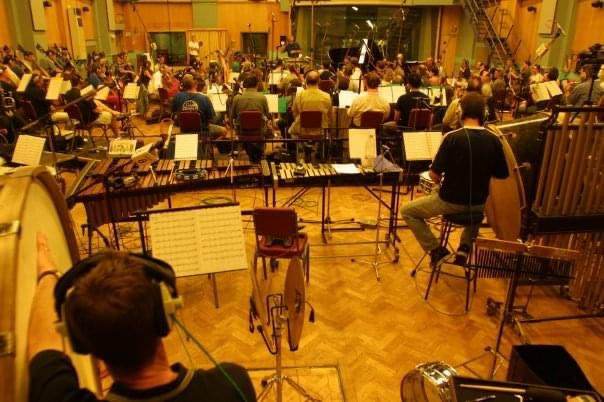
Abbey Road Studios, Studio 1 Live Room, 2002. Recording of Tomb Raider ‘Angel of Darkness’. Pictured here is a rear shot of the London Symphony Orchestra.
Can you tell us about the most memorable moment in your career so far?
Standing in Studio 1 at Abbey Road, listening to the London Symphony Orchestra perform the Angel of Darkness theme (the version used in-game). Hearing it LIVE will never match the experience of how you hear it in-game, on CD, vinyl, Spotify, whatever. It was on another level being there, in the same room whilst they did their thing. Best way to describe this is being in a real Formula 1 car, on a real track, opposed to being in an accurate video game simulator.
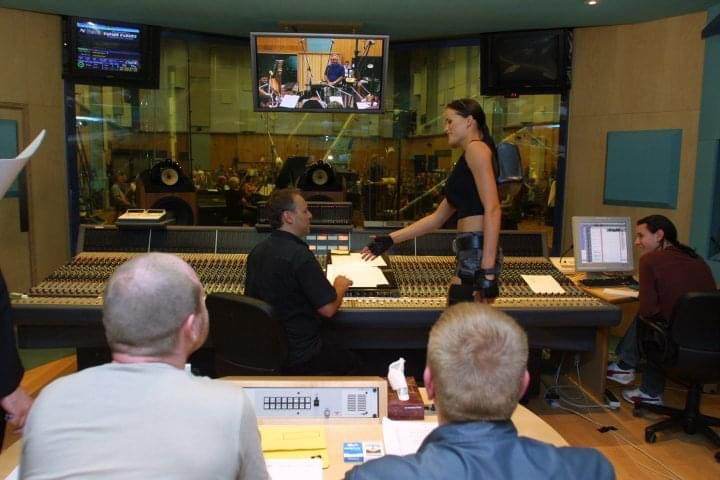
Abbey Road Studios, Studio 1 Control Room, 2002. Recording of Tomb Raider ‘Angel of Darkness’. Pictured here from front left to front right are Pete Cobbin (Recording & Mix Engineer), Jill de Jong (Lara Croft Model), and an unknown Assistant Engineer. In the rear left and right are Martin Iveson and Peter Connelly.
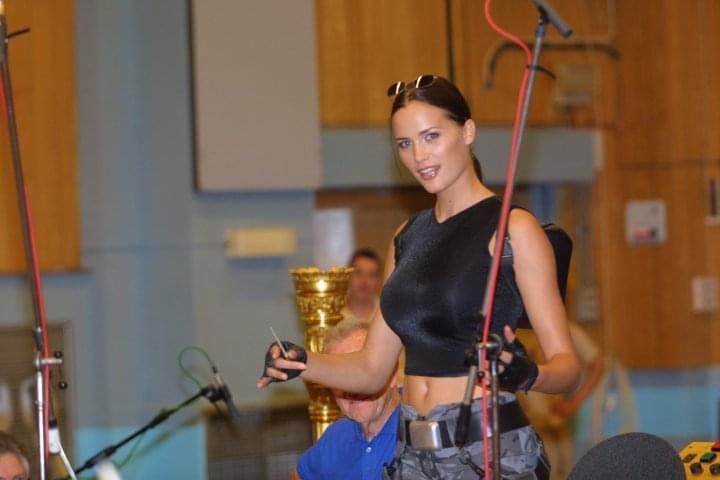
Abbey Road Studios, Studio 1 Live Room, 2002. Recording of Tomb Raider ‘Angel of Darkness’. Pictured here in a PR shot is Jill de Jong, the model for Lara Croft.
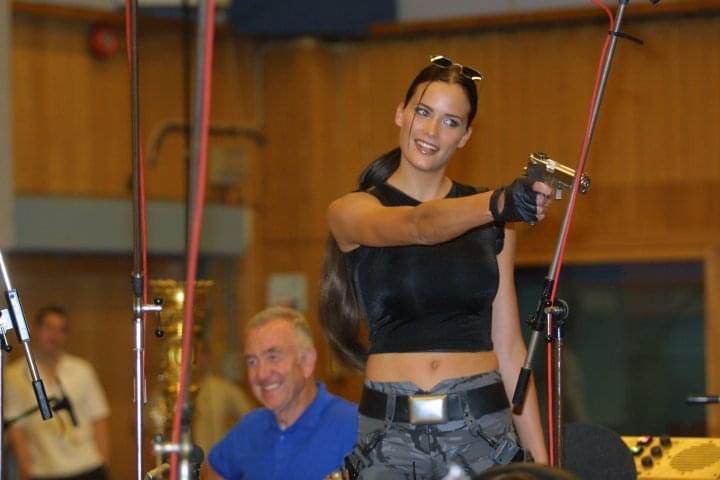
Abbey Road Studios, Studio 1 Control Room, 2002. Recording of Tomb Raider ‘Angel of Darkness’. Pictured here in a PR shot is Jill de Jong, the model for Lara Croft.

Abbey Road Studios, Studio 1 Control Room, 2002. Recording of Tomb Raider ‘Angel of Darkness’. Pictured here in a PR shot is Jill de Jong, the model for Lara Croft.
How do you see the future of video game music and sound design, and what role do you see yourself playing in it?
Audio in Video Games has become BIG BUSINESS and a lot of the disciplines I once worked alone are now split into multiple categories, it is no longer the expectations of a one-man band. Back then I wrote the music, created the sound effects, applied all the sounds to animations, level implementation, synced audio to cinematics and was even involved in localisations, with the help of localisation managers. These days, everything is broken down and, each discipline has its own expertise. Music is dynamic so there it’s rare to deliver a full “FINAL” stem. It’s often broken down into its elements to change the dynamism depending on the narrative and surround stems are also common place. Personally, I love doing it all so whatever I can delve into, I appreciate.

Master Chord Studios, London, 2019. Recording of Tomb Raider ‘The Dark Angel Symphony’. Pictured here are Laurence Cottle (Bass) (left), Ronan Phelan (Recording / Mix Engineer) (middle), and Richard Niles (Arranger / Orchestrator) (right).
Can you discuss your experience working with various studios and how it has helped you grow as a professional?
The first thing to note is, EVERY studio is different so don’t expect a new role to feel the same as the last. I can’t think of one developer I’ve worked with in the 28 years I’ve been doing this that is the same. Sure, there are similarities in how they operate but, overall, they’re all quite different. The dynamics of individuals can also make a huge difference to the experience. Some places I have hated working at (my advice: get out ASAP), and others, I have loved every minute. One thing to nurture within yourself is to remain professional and be accommodating to those you’re working with to ensure any disagreements are minimal… sure, there will be times you need to stand your ground, especially if it’s in the interests of the project you’re working on… but never let situations become personal.
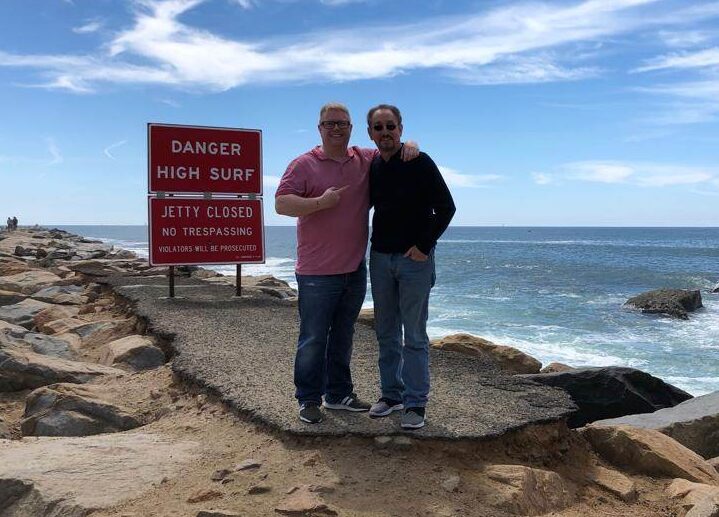
LA, Laguna Beach 2019. Pictured here are Peter Connelly (left) and Richard Niles (Arranger / Orchestrator) (right).
How do you balance the creative and technical aspects of your work and what tips would you give to aspiring game composers and sound designers?
Before you commit to any creativity, ensure you understand the specifications and limitations of the project you’re working on. Think ahead and picture HOW you will implement the audio into the game. What is the technological pipeline, are you going to take control of direction or is this something that will be fed to you. Understand where you’re going, THEN get creative and work within them boundaries with the possibility of pushing as and when you see opportunities arise. The formula is forever evolving.
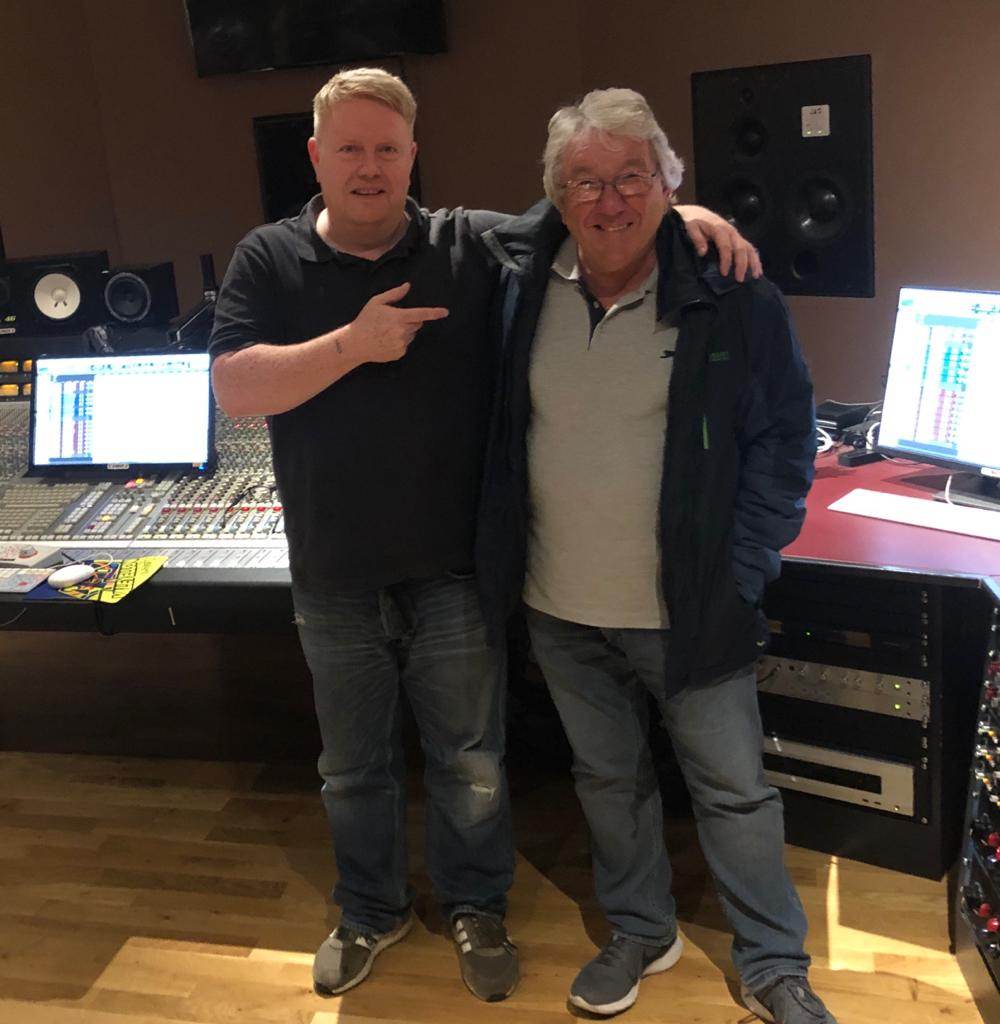
Master Chord Studios, London, 2019. Recording of Tomb Raider ‘The Dark Angel Symphony’. Pictured here are Peter Connelly (left) and Pete ‘Mixmaster’ Hammond (right).
Last but not least, what is your all-time favourite game soundtrack and why?
Legend of Zelda (N64): Ocarina of Time as I can still hum all the tunes 25 years on and know what they were used for. Delta (C64): The music, overall, is phenomenal (a Hubbard CLASSIC) but, when you finish the game, it simply goes back to the 1st stage BUT is overpowered with this AMAZING piece of music you only hear when you complete the game. There are LOADS actually, I used to buy games JUST for the music, but these 2 above are there, at the forefront of my mind right now.
In conclusion, we hope you enjoyed learning more about Peter Connelly, the incredible game composer who has brought us some of the most iconic soundtracks in video game history. We are thrilled to feature him in upcoming articles and are excited to offer our Twitter followers the chance to win one of two signed LPs of Tomb Raider: The Dark Angel Symphony.
Click here to enter the giveaway and visit our Twitter page for more information.