

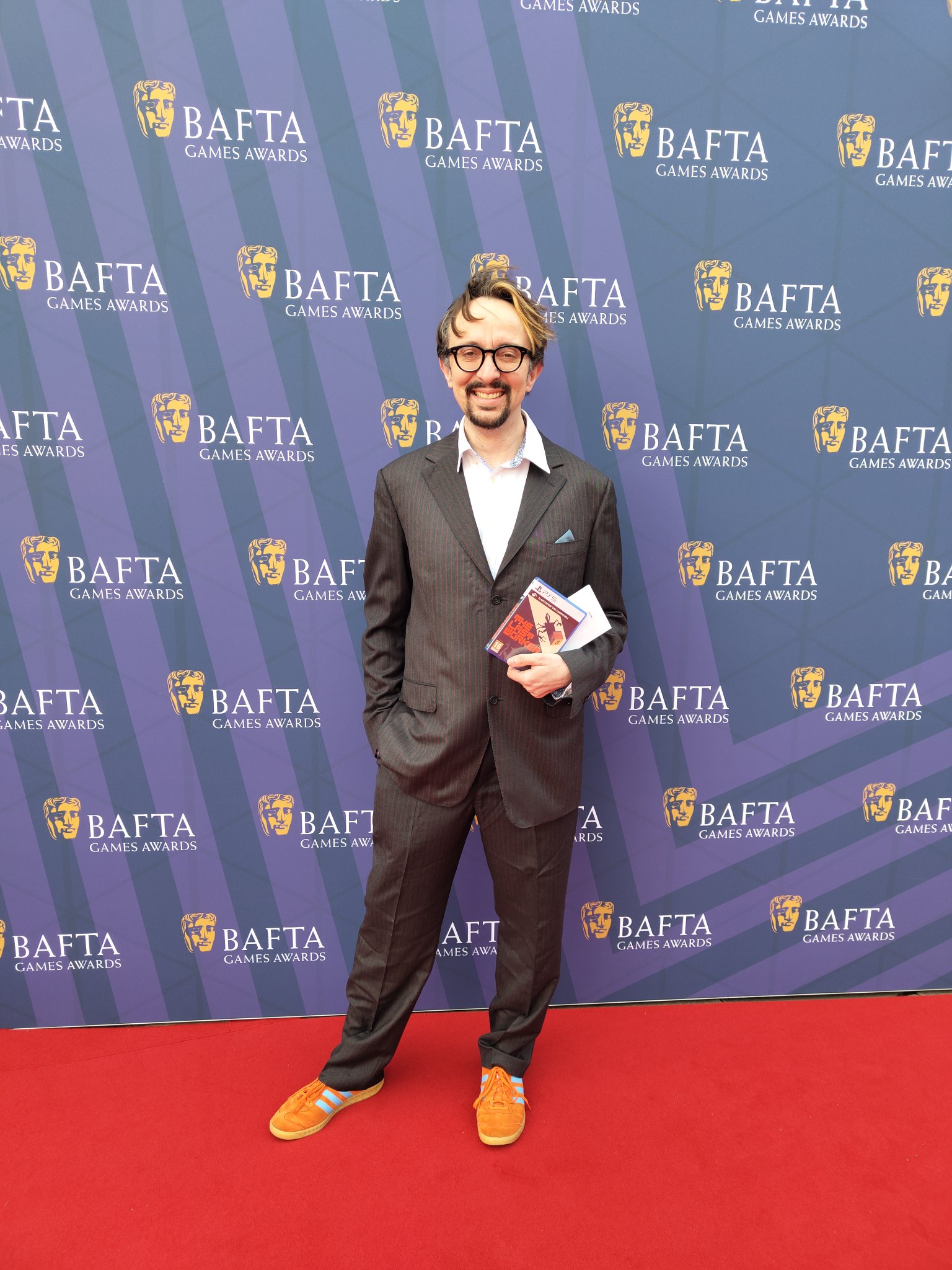
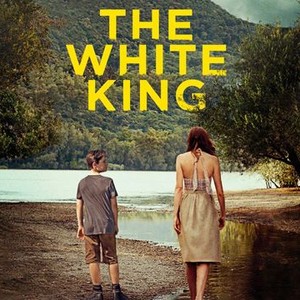
Greetings Ladies, Gentlemen and those of a non-binary nature. My name is Daibhi, this is the Gamerhub and recently, I got to interview Jörg Tittel. Tittel is a name among many forms of media. From creating the amazing graphic novel, Ricky Rouse Has Got A Gun, to directing the superb The White King (which you should definitely watch) to creating a few video games, one of which is in my top 20 video games of all time, Tittel has done it all. With the videogame developing house Rapid Eye Movers, The Last Worker was created, and most recently, C-Smash-VRS. The following is a transcript of the conversation we had on the 5th of July 2023.
Daibhi: I’m here with Jörg Tittel. Jörg is a video game designer of sorts, he’s made films, graphic novels, he helped create a West-End theatre show and we’re here to talk about C-Smash-VRS as well as other things. So, Jörg, which media do you prefer to tell stories with and why?
Jörg: I think every medium itself is a different stage and with each medium you have different forms, kinds of stages you can build certain ways. If I were to talk about video games for instance, you can have flat games, you have handheld games, you have VR games, and with each one of them, if you were to tell stories with them, and technically, because we are story-telling animals, we like to project meaning onto things and see meanings in everything. Everything has a story, even the game of Tetris because of the way the blocks fall and the way the intensity builds, you start creating your own inner narrative, while you play each level. That being said, I don’t have a preference, because each one is different and not every story lends itself to the same medium. Some of them shouldn’t and wouldn’t be as good or as interactive in others, in order to be fully expressed. For instance, with The Last Worker, I couldn’t imagine it in a graphic novel. I was working with Mick McMahon on the art, and he’s one of the greatest comic book artists on the planet. He co-created Judge Dredd, and he’s done all these amazing works like Slaine over the years. So, I couldn’t make The Last Worker a comic, but that particular game for instance, had to be interactive as I wanted people to empathise with the idea of being this lonely last worker in a fulfilment centre because this is the kind of person that we take for granted. I wanted people to know what it’s like to be in that position, for instance being an Amazon worker in a fulfilment centre. It’s something that you’d have to experience to truly be able to empathise with and relate. It’s a very long answer, but I don’t have a preference, but right now, I have to say that the plane I’m on in which I like to tell stories to create experiences to make people feel things is immersive media, for sure. I love it. I love the response and reactions I’m getting from people playing C-Smash-VRS and The Last Worker, for instance. It’s special to me.
Daibhi: In other interviews, you’ve spoken about your love of VR, and the immersion of the format, I wondered if you try to tell stories with as much immersion as possible for every individual person? Or do you prefer to tell a self-contained story?
Jörg: It’s funny, because with C-Smash-VRS, there’s no story at all, in a way. It’s almost like a Zen garden, where everything has been reduced to a point where it leaves room for your own thoughts. Hopefully happy thoughts and calming thoughts to roam free and you project yourself into it. It’s great. After The Last Worker, which is so dense and rich in texture, commentary and satire, C-Smash-VRS is a lovely palate cleanser for me as a creator and also for the team who developed both games with me. My next game (and the next couple of games I haven’t announced yet), one of them is going to have a very intense and rich world, but the narrative will be for the players to create within it. I get very bored very easily and so I can never do the same thing twice. That’s why everything I’ve done has been so very different.
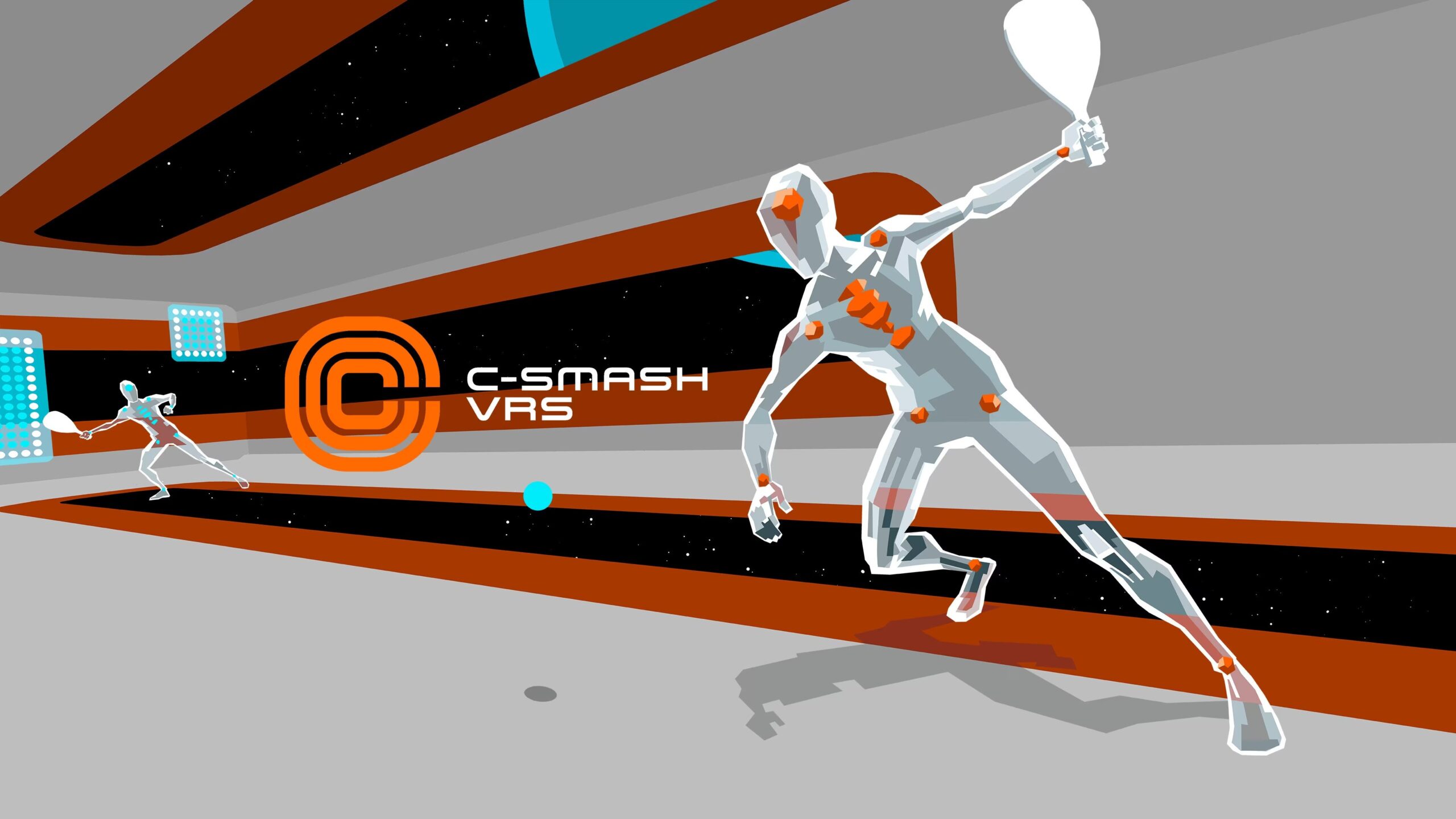
Daibhi: That’s why we here at Gamerhub review different games for all types of gamers. It’s why I personally stopped reviewing just racing games and I now review all kinds of games, but with a focus on the indy games these days. So, C-Smash-VRS, I’m to understand that it’s a sequel to a Dreamcast game that was incredibly rare and very few people in Europe had heard of? Why did you create a follow up to Cosmic Smash?
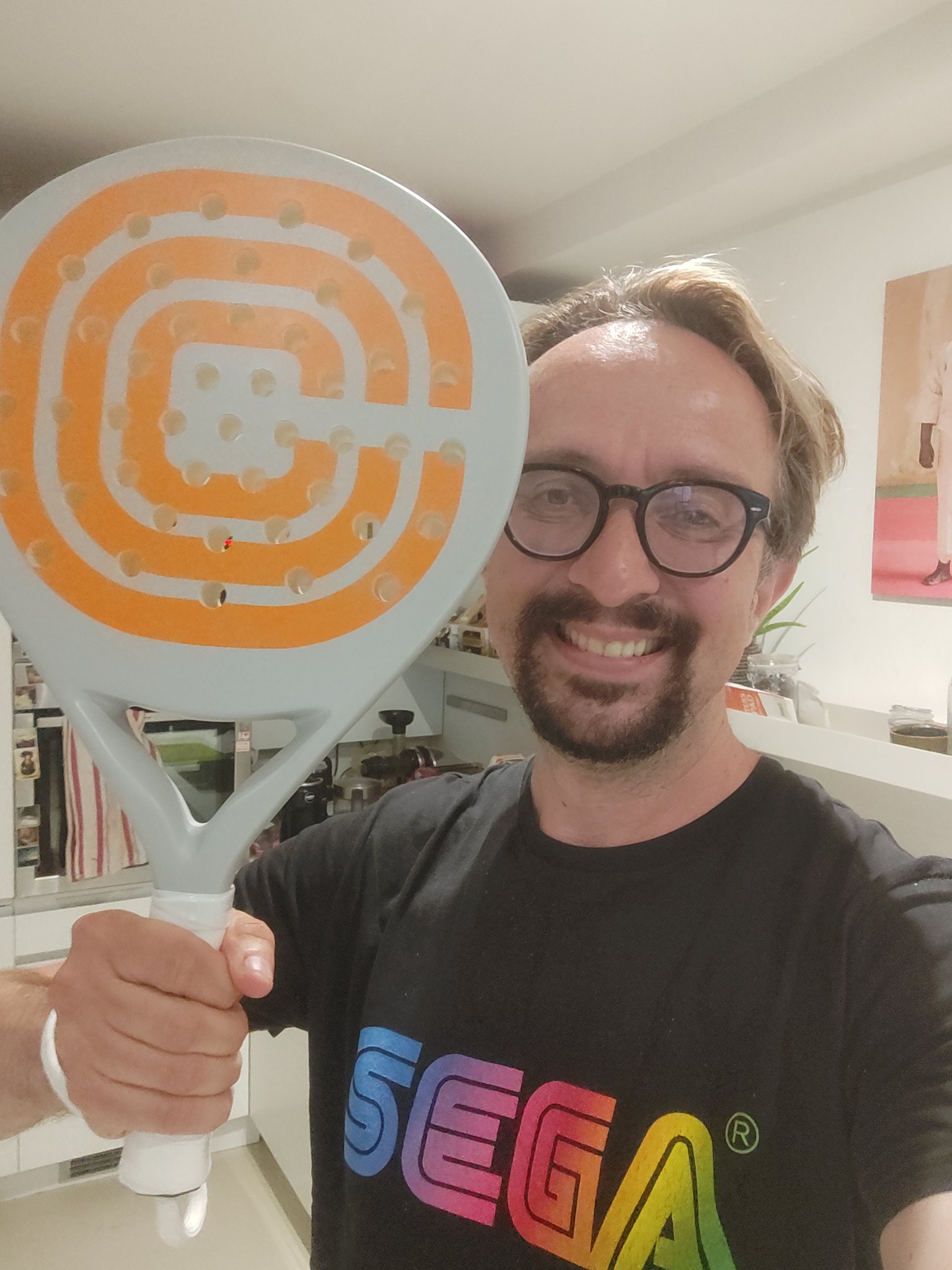
Jörg: Because I’m an incredible businessman [laughs]. I fell in love with the original game so much that for me it was like the perfect send-off for the perfect console, and unfortunately, it landed after most people had given up on the Dreamcast. It came up after SEGA had discontinued the console. When I first saw that screenshot in Famitsu Dreamcast, well Famitsu DC, which was the Dreamcast edition of Famitsu, at the beginning of 2001, it was an issue in which I interviewed Yoshitaka Amano (the artist behind the Final Fantasy games) and I actually have his artwork in my office here in London. He drew a piece of artwork for me in his studio in New York in 2001. I had my double-page spread in Famitsu DC, which was amazing, with photographs I’d taken in Yoshitaka’s studio in New York at the time. There was a really cool photo of him holding a skull and smiling next to it because he was using it for reference to get the proportions right as one does. Anyway, I flipped the page and there was this one screenshot of this racket holding translucent character in this minimalist corridor and it’s at the time when it was in Japanese. It said Naomi in English lettering in it, so I knew it was for an arcade cabinet. I was hoping it would come to the Dreamcast and in October it did. I was like “I need this”. It had this gorgeous DVD case that it came in, which was unusual as Dreamcast games traditionally came in CD cases.
Daibhi: I remember that. Recently I covered Replay Events’ gaming expo in Glasgow and they had a market section, where one vendor was selling a copy.
Jörg: How much was it?
Daibhi: Somewhere in the early triple figures.
Jörg: Bastards! Ever since C-Smash-VRS came out, Ive seen the price of that game go up and up on ebay. It’s crazy. It’s like “oh shit!” I have a shrink-wrapped copy of it buried deep in my house and I’m never going to open that one. If I show you my videogaming shelf, we’d be here all day as I’m a massive retro-gaming nerd. I’ve pretty much got every Dreamcast game ever released. I’m an idiot.
Daibhi: I liked the Dreamcast! It was well ahead of its time!
Jörg: Yes! Oh my god, it’s the best console ever. To me it’s the… in a way, every console made afterwards has only reiterated what the Dreamcast did first. It was the first console that properly took us online, it introduced a lot of people to the internet. The Dreamcast also had cross-platform play with the PlayStation 2 for a Capcom game with multiplayer, it did all these things way ahead of its time. It had a second screen, the VMU, it was just glorious. 4 playes could connect to it offline, it was beautiful. I have 3 of them nowadays, because I’m always paranoid about one of them breaking one day, I have multiple CD-Rom drives, in case one of them dies and then I can just replace it. I even have a portable Dreamcast made for me by some very clever hobbyist people in China. [He then brought it out of its case and booted it up]. It’s the most stupid thing that I’ve ever bought.
Daibhi: That is insanely cool!
Jörg: It is insanely cool. It’s completely insane. It’s nuts. It runs games on it, and it’s a beautiful thing.
Daibhi: Are you worried about lack of access to your new game, C-Smash-VRS due to the current inflation crisis and in the uk, the cost-of-living crisis brought on by the present UK Government administration?
Jörg: It greatly concerns me. It is a fucking problem, and PS VR2 is not a cheap addition to everyone’s gaming hardware collection. However, C-Smash-VRS will come to other VR headsets further along down the road. We haven’t announced when and which headsets it will come along to, but we’re working to make this game accessible to the more democratically priced in time. At the same time, I want it to be part of the PlayStation VR2 launch title library. I adore PlayStation, I love working with them, the hardware is fantastic. The Cost of Living Crisis in the UK is an issue. The other thing that has been… shall we say challenging… has been the fact that a lot of people that were locked in during the pandemic, picking up VR because you couldn’t go outside are now realising you can go outside again and sunshine is quite nice. We released it shortly before the hottest weekend of the year and in a way, the first opening weekend didn’t quite have people going crazy because most people in the UK don’t have air conditioning. So there are challenges, but I love the PlayStation VR2, and hopefully, at some point it will come down in price so more people can experience it and my game too! VR is still not as democratic and as accessible as it will be one day.
Daibhi: How far do you think VR has to go, and I’m not just talking about tech, but how accessible it will be for people in the future?
Jörg: I’m one of the people that is dreaming about a future where the games are accessible to everyone. We’re all experiencing immersive realities whether we know it or not. Whether its with a screen or a watch or whatever, we’re technically inside the web. It surrounds us. There are these parallel worlds. I’d rather have people consciously step into an immersive, artistic world with meaning rather than having their privacy and data stolen by what I call “Data Creeps” of Silicone Valley. I want a world in which our bodies can fully express themselves in story world and not rely on buttons, triggers and nonsense which is still a hangover from 40 years of videogame standards. I was hosting a panel about VR Future design, at Reboot Develop Conference in Croatia 6 weeks ago. They’d actually named a stage after my company, RapidEyeMovers. It was pretty amazing to be there under the sun with VR developers. Doug Northcook, one of them said that joypad is the heart of it. The trigger, he said, its for gun games, it’s the dominant feature. It requires the most engineering, you have to program all this crap. For example, on the Ps5 controller, you have to program for all this haptic feedback, and it takes the most battery power.
Daibhi: It’s one of the reason a lot of our gamers are glad I cover mostly Xbox stuff, where there’s less of that on Xbox controllers.
Jörg: It shows that this industry… you can see the battle between PlayStation and Xbox consoles and gamers with Call of Duty. You can see that everything is still about games involving guns, and “shooty-shooty” nonsense. It’s still very much about that. Synapse just came out on PS VR2 yesterday. It’s a great game but again, it’s about shooting and destroying stuff. People are very excited about that. There’s a whole plethora of people who are simply not interested in shooting things in videogames. They don’t want to shoot people in the face. They won’t engage in games with a device which ultimately is a gun. I want to get rid of all that and allow gamers to express themselves freely.
Daibhi: Why make a game set in the future? Is there a reason that C-Smash-VRS is set in the future?
Jörg: Is it set in future? I wouldn’t say that. The original was. Is this in the future, an alternate reality, or a utopian altered reality? I don’t know. Techincally, I haven’t decided whether it is in the future or an alternate universe. I mean it is a universe of graphic design, and not a real place. In that sense, it’s an imaginary one. For me it is the ultimate holodeck of gaming. You step in, you have your whole body inside of it. You look down and see your knees, your feet. You look to your hands and you see your arms, perfectly articulated to replicate your real-world movements. We animate your legs because we don’t yet have real-world leg detectors built into PS VR2.
Daibhi: Is that going to be something you’d look forwards to in the future?
Jörg: Absolutely. Already Quest and Meta have been showing off how they’re doing it with the existing hardware, with the Quest 3 the other day, there’s huge progress being made that way. I look forwards to it. I want to be free of devices as much as possible, down the road. We’re being choked by technology currently. But technology has to be considered a natural thing. It has been since the beginning of time. The first cave painting was made thanks to technology. Someone had to create the fire, we discovered to do that and recreate that, we created tools to leave marks permanently in the wall and here we are thanks to tech. After all this time, this incredible piece of art still exists after tens of thousands of years. Whereas the tools we used to do that are gone. We are now living in a world where toolmakers like Bezos, or sellers because Bezos doesn’t make anything. Where the Elon Musks of the world think that they’re in charge of us because they make the things that we rely on. The other thing that I wanted to make with this game is that I wanted to make technology beautiful and holistic and utopian. To make it feel organic despite the fact that it is clearly artificial. It feels really soothing to be in a technological world in a way that it feels like a zen garden as opposed to an intrusive attack on the senses.

Daibhi: How did you manage to get the rights for Cosmic Smash from SEGA?
Jörg: It was a long process which required many steps. I can’t talk about all of them in detail, but it took a lot of time and passion, a lot of perseverance. I had to even convince SEGA of the validity of using up their own time to convince some of their staff to work on something as obscure as Cosmic Smash. Most people, even within Sega didn’t know what that game was, or even if it was theirs. Most of them were young employees who didn’t have a dreamcast when they were younger. It was bizarre. I had to convince them to bring back something they had made decades ago. The response has been so positive to the game that our friends in SEGA have been very happy to see that this crazy idea to bring back an obscure gem. I’m working with the best people. I’m just a guy with crazy ideas and a drive to pull it off, but the only way to pull it off is by working with truly top talent. We already pulled off some miracles to create The Last Worker, which is a huge game made by a tiny team of less than ten people. With C-Smash-VRS, it’s like everything just feels good. It feels good, it sounds good. For instance, my son is on the Autistic Spectrum and he has sensory issues. He just senses things very intensely and he just loves it! It makes no excuses for the sounds, it’s just like ASMR. That’s important for me going forwards. I want to create digital experiences that people don’t feel assaulted by. That doesn’t mean everything has to be relaxing, I can also make an intense world. For example, if I’m going to make a horror game, I’m going to include something that is truly horrifying. If I’m going to make violent game, then the violence has to be properly justified. It will have to be so intense that it makes no apology for it, but then it makes you think about the nature of the violence etc. With C-Smash-VRS, we’ve been working in a way that when we see something where we say “this is cool”, then we got rid of it. Everything had to be stripped down to its essence. It had to be beautiful. Less, but better.
Daibhi: I think the minimalism is what makes C-Smash-VRS beautiful, having played it.
Jörg: That was very much our intention. It feels good. It is graphic design made physical and I’ve never felt anything quite like it.
Daibhi: Was there an arcade you visited as a child?
Jörg: There was a travelling circus that used to pass by my town every summer, just outside of Brussels. It was the highlight of the summer for me as a child. In one of the tents, there was a lot of arcade machines. In the summer of 1986, I stepped into a full size cabinet of Outrun for the first time. It changed everything for me. I think Sega invented VR with that. They almost released a VR headset for the megadrive back in 1992. It’s amazing in terms of the design, as it looks nearly exactly like how VR hardware does nowadays. It even had the turn wheel at the back to adjust how it fit around your head! Then at CES in Las Vegas, they announced thee price point (around $200) and then SEGA of America got cold feet, they were afraid people might get motion sickness and so they killed it. It’s a shame, because they were working on virtual racing. That’s what VR would have stood for: Virtual Racing. It would have been amazing to play that. A third-person racing game in VR, with semi-top-down view, where you could have turned your head to the left and right to see the world. On the Mega-Drive, the frame rate would have been absolutely awful, but the mechanics were there. They were way ahead of their time. With the arcades, they had a VR arcade cabinet in the 1990s. SEGA to me have always been a VR company. I always feel like I’m diving into a world with them. Whether that’s Sonic The Hedgehog, Outrun, the blue sky is something that you’re under, that makes you feel good, it’s iconic. It represents that feeling.
Daibhi: What was the first video game that you owned?
Jörg: Jesus… I think the first game that I owned that I remember was on Commodore 64, I think it was Turrican. It’s a great game. The voice-over when it came out of the C64, as much as other video games had that feature, they don’t count. When you put that disk in, and you heard that voice, it was magic. It was speaking!
Daibhi: Was the C64 your first console?
Jörg: Yes, it was my first console, and then I bought SEGA stuff. Game Gear, Master System, Mega Drive, Saturn, Dreamcast, I was very much a SEGA kid. The only one I never had was the original, the SG1. I never had that one.
Daibhi: If money was no object, which console would you own right now?
Jörg: If money was no object… As in which console do I not have yet that I would like? I have spent a fortune over the years so I have all the current generation of consoles. I have an Arcade Cabinet of Cosmic Smash I rescued a few years ago from a museum. I got it for the office. During the pandemic, I felt incredibly boxed in inside my office in London. I was dreaming of being in a larger place, and I searched for one. I was dreaming of making C-Smash-VRS and it wasn’t yet a reality. At some point, I searched for it on Instagram and someone had gone to Stockholm Video Game museum and the museum had it. I emailed the museum to see if I could have it if they ever wanted to replace it. The pandemic closed the museum, and the original owner sold me it. It was incredible. I think I have all the consoles a man would ever need and the best arcade cabinet so I don’t want any more consoles.
Daibhi: If you could recommend a video game other than Cosmic Smash?
Jörg: The Last Worker. I’m incredibly proud of it, it runs beautifully on the Nintendo Switch as well as consoles and PC. Games by someone else that I would recommend? I just played the new Ghost Trick demo and it’s special. It’s beautiful. Ghost Trick Phantom Detective is really something. It’s available on consoles. I’m excited about it. After this release, and the DLC, I’m going to play this from start to finish.
Daibhi: Thank you for your time, Jörg, you’ve been a great interview.